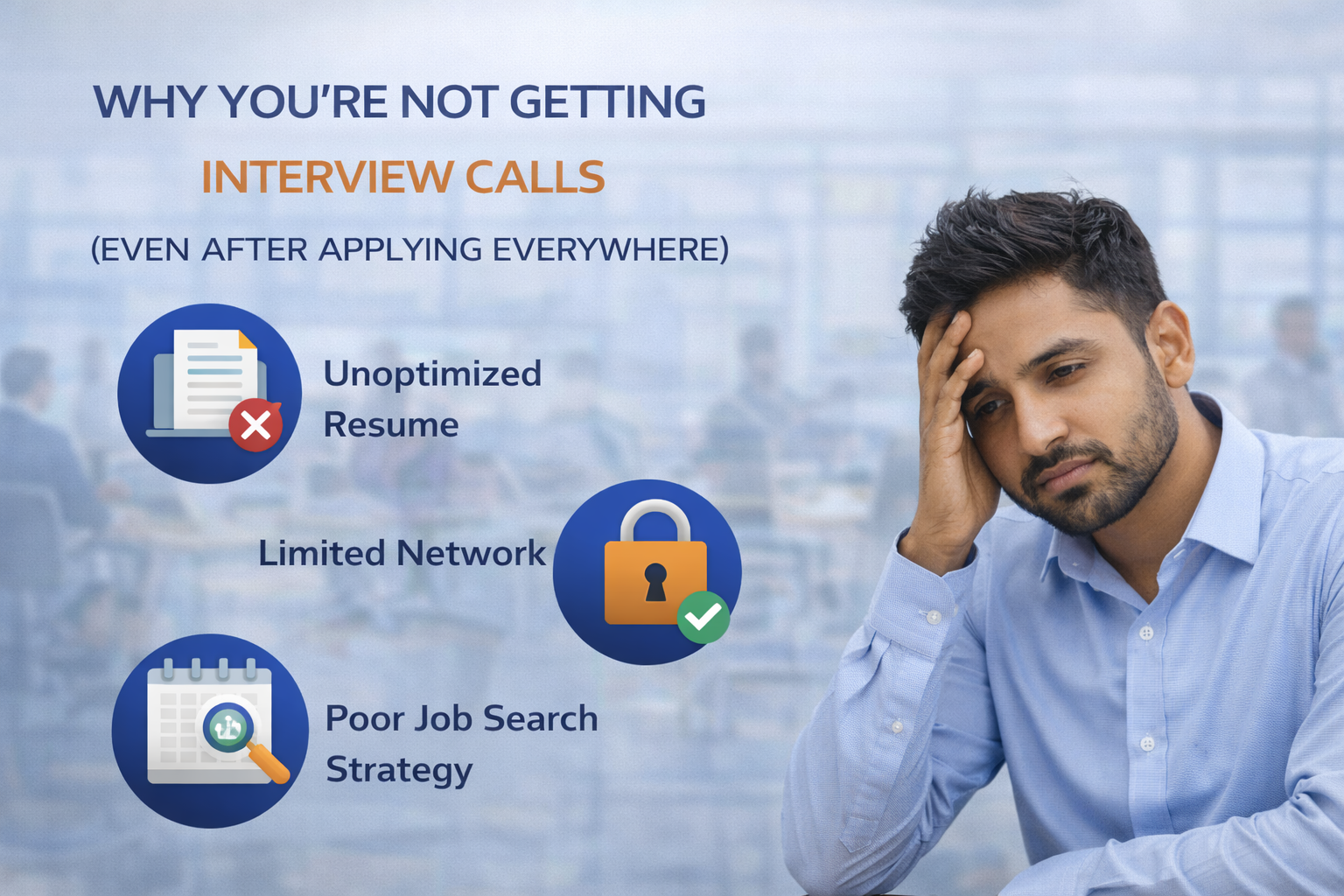
Why You are Not Getting Interview Calls
It is 2026, and the "Great Application Inflation" is at its peak. With one-click "Apply" buttons and AI-powered resume generators, the average corporate job posting in the USA now attracts over 500 applications in the first 48 hours.
If you’re sending out hundreds of resumes and hearing nothing but "ghostly" silence, the problem likely isn't your talent—it's your strategy. Here are the five reasons your applications are being filtered out before a human ever sees them.
1. You’re Failing the "Agentic" ATS Filter
In 2026, Applicant Tracking Systems (ATS) like Ashby and Greenhouse have evolved. They no longer just look for keywords; they use "Agentic AI" to reason through your experience.
- The Mistake: Using a generic resume with broad descriptions. If the AI doesn't see a "Skills Match Score" above 85%, your resume is never flagged for human review.
- The Fix: Don’t just match keywords; match outcomes. Use specific data points. Instead of "Managed a team," use "Led a 12-person distributed team to deploy 3 AI-driven microservices, reducing latency by 40%."
2. The "Ghost Job" Phenomenon
Research in 2026 shows that nearly 40% of active job postings aren't actually looking to hire right now. Companies keep these "Ghost Jobs" open to build talent pipelines or test market salary benchmarks.
- The Mistake: Applying to "Evergreen" roles or postings that have been up for more than 30 days.
- The Fix: Filter your search for jobs posted in the last 24–48 hours. Use LinkedIn "Verified" postings to ensure the company is actively interviewing.
3. "Desperation Spray" vs. "Sniper Precision"
Applying to 100 jobs you are "vaguely" qualified for is less effective than applying to 5 jobs where you are the perfect fit.
- The Mistake: Applying to senior roles when you are mid-level, or remote roles when the company prefers local candidates in hubs like Austin or NYC.
- The Fix: Focus on the Top 10%. Only apply to roles where you meet 90% of the "Required" criteria. In 2026, recruiters have so much choice that they rarely settle for "close enough."
4. Lack of "Entity Trust" (LinkedIn Inconsistency)
AI recruiters now cross-reference your resume with your digital footprint.
- The Mistake: Your resume says you’re a "Senior DevOps Engineer," but your LinkedIn headline says "Tech Enthusiast" and your last post was 6 months ago.
- The Fix: Ensure your "Digital Entity" is consistent. Your LinkedIn headline, skills section, and recent activity must mirror the professional persona on your resume. AI models look for this "trust signal" to verify your credentials.
5. You’re Not Using the "Referral Fast-Track"
In a crowded market, a referral is the only way to bypass the AI gatekeeper entirely.
- The Mistake: Applying through the portal before checking your network.
- The Fix: For every job you want, find one person at that company on LinkedIn. Send a brief, human-centric note:
"Hi [Name], I'm applying for the [Role] and noticed we both [shared interest/college]. Would you be open to a quick chat about the team culture?"
The 2026 "Application vs. Interview" Audit
| Current Status | Likely Cause | Recommended Action |
|---|---|---|
| Instant Rejection | Failed ATS skills-match. | Use an AI resume auditor (like JobScan) to check your match %. |
| No Response (Ghosted) | High volume / Ghost Job. | Only apply to "New" postings (< 48 hrs). |
| Rejection after 1st Screen | Lack of "AI Literacy" or Cultural Fit. | Prep for behavioral questions regarding AI workflow integration. |
FAQ: Navigating the 2026 Hiring Landscape
Q: Should I use AI to write my cover letter?
Ans: You can use AI to structure it, but a purely AI-generated letter is a "red flag" for recruiters in 2026. Personalize at least 50% of it with specific mentions of the company’s recent Q1 or Q2 goals.
Q: Does "Remote" work make it harder to get called?
Ans: Yes. Remote roles receive 10x the applications of on-site roles. If you are struggling, try applying for "Hybrid" roles in your nearest tech city; the competition is significantly lower.
Q: Is "Ban the Box" helping?
Ans: In most US states, yes. Background verification happens after the offer, so don't let a past gap or record stop you from applying. Focus on your current skills first.
Final Pro-Tip: The "2-Minute Rule"
If you can’t explain how you specifically solve a company’s current problem within the first two sentences of your professional summary, you’ve already lost the recruiter. In 2026, clarity is the new currency.
Interviews
Candidates
Courses
Trainers